
Anchorage Continuum of Care (CoC)
The Anchorage Continuum of Care brings partners together to help prevent and end homelessness through coordinated planning, funding, data, housing systems, and community collaboration.
-

What We Do
Explore the programs, coordinated systems and collaborative efforts that make up Anchorage’s homelessness response.
-

Advisory Council
Learn about the Advisory Council, its committees, and the people who help guide the work of the Continuum of Care.
-

CoC Membership
Find out who can join the Continuum of Care, what membership means, and how to get involved.
-
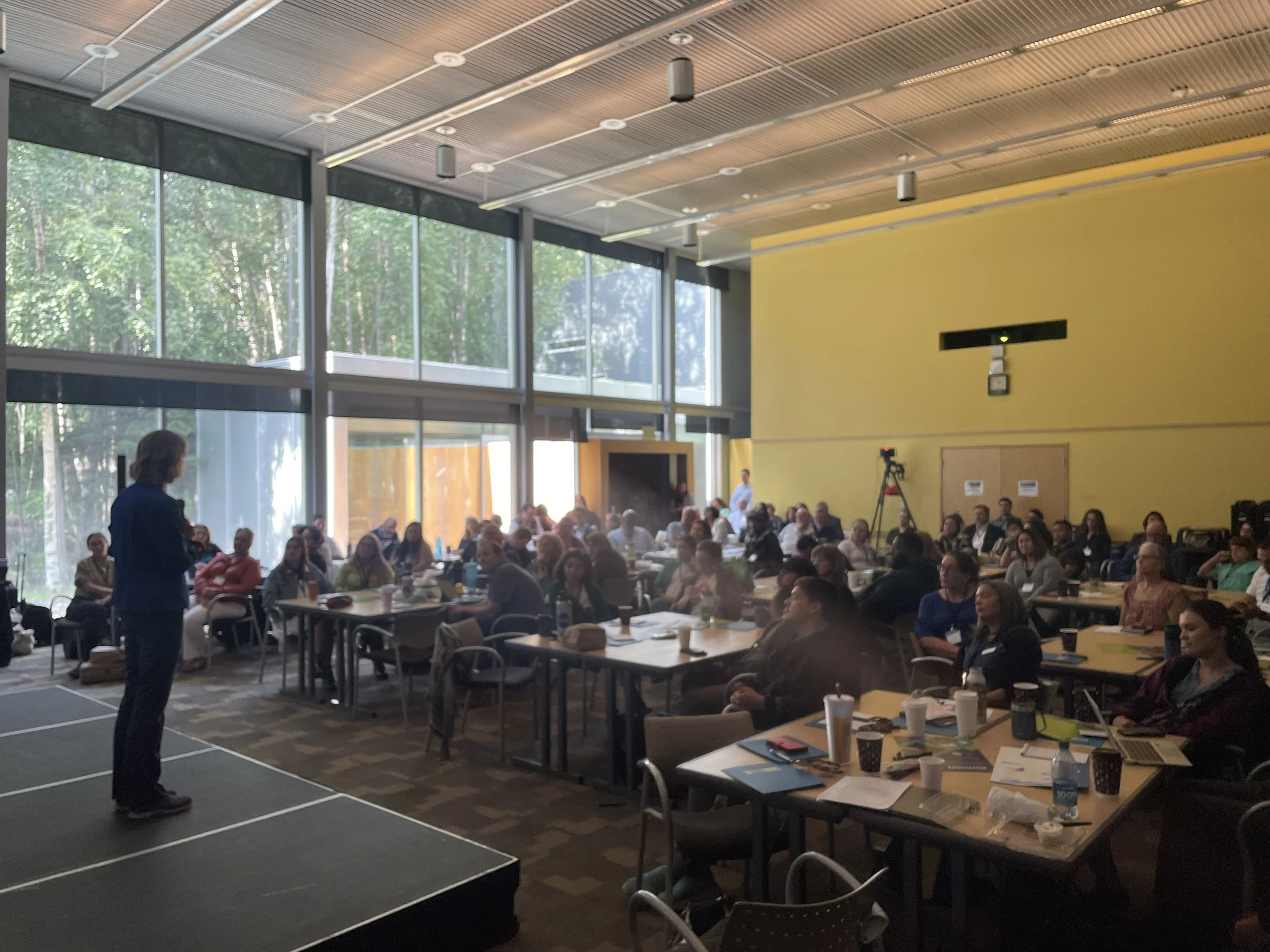
Meetings & Events
Access meeting information, calendars, agendas, minutes, governance documents and key CoC resources.
About the Continuum of Care
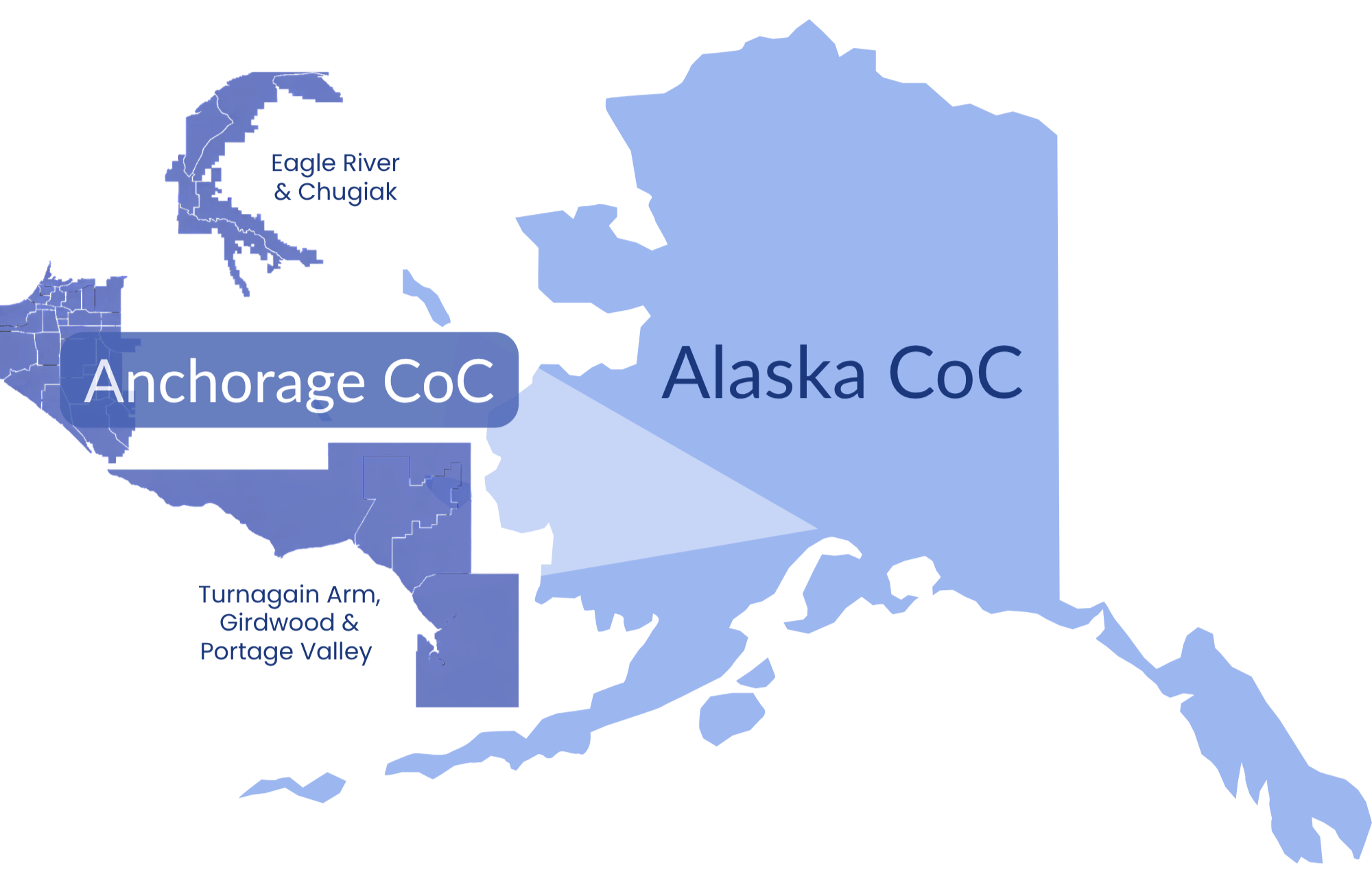
The Anchorage Continuum of Care (CoC) is a communitywide system that coordinates Anchorage’s response to homelessness. The Anchorage Coalition to End Homelessness (ACEH) serves as the lead agency, supporting planning, collaboration, data management, and system improvement across partners.
The CoC operates under a framework established by the U.S. Department of Housing and Urban Development (HUD), which provides federal funding and guidance to communities working to prevent and end homelessness. The Anchorage CoC covers the area from the Knik Arm Bridge to the Whittier Tunnel.
The Advisory Council serves as the governing body of the Anchorage CoC, guiding community planning, funding priorities, and system coordination through a collaborative, community-based process.
Together, ACEH, the Advisory Council, and community partners work to align resources, strengthen coordination, and reduce the trauma of homelessness. The CoC supports efforts such as rapid rehousing, long-term housing stability, street outreach, and tailored services, including support for people fleeing domestic violence, dating violence, sexual assault, and stalking.
Continuum of Care membership
Anchorage organizations and community members are invited to join the Continuum of Care and help shape our community’s response to homelessness.
The Continuum of Care (CoC) is a network of partners working together to improve how people access housing, services, and support. As defined by the U.S. Department of Housing and Urban Development (HUD), CoC members include individuals and organizations within, and those that interact with, the homelessness response system.
Members may include housing providers, public agencies, Tribes, healthcare and behavioral health partners, outreach teams, first responders, victim service providers, schools, and people with lived experience.


Become a member
Join the Anchorage Continuum of Care and be a part of the solution to homelessness.
Membership is free and strengthens our community’s strategy.
Comments, questions or concerns?
Contact us at info@HPRSadvisorycouncil.org.
Grievance form
This form is for individuals who wish to file a formal complaint or grievance regarding services or experiences related to the Coordinated Entry system in Anchorage. This includes concerns about access, assessment, referral, or treatment by any participating agency or staff member.